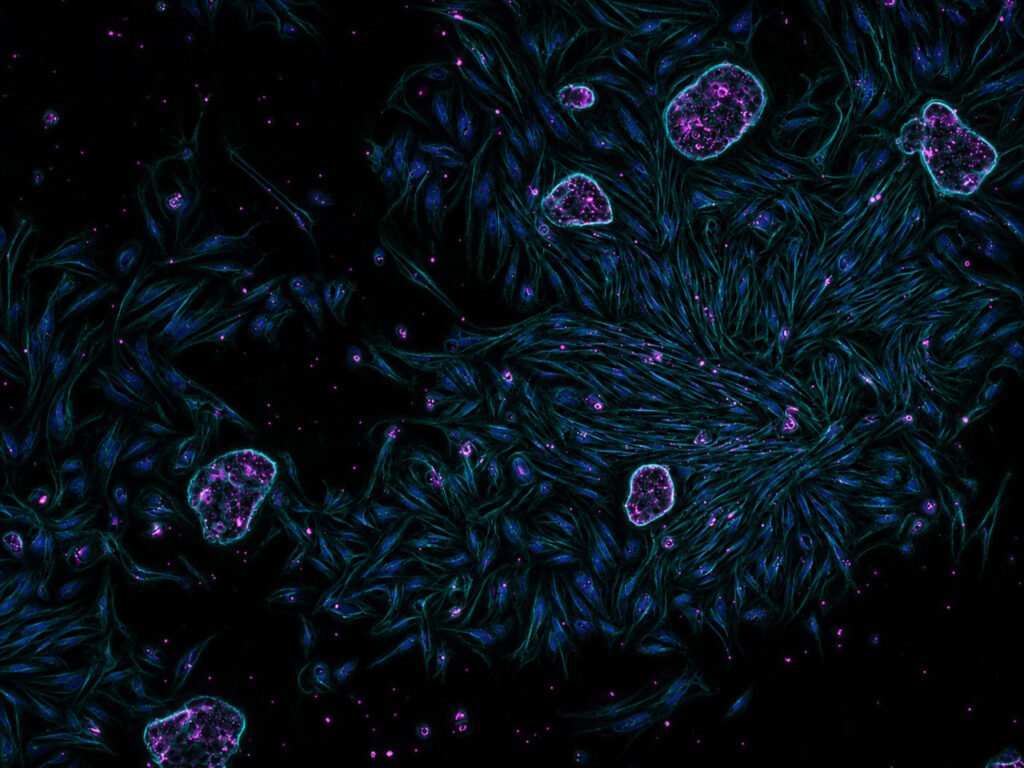
On Nov. 19, 2026, Encapsulate Inc. released an image displaying gastric microtumors grown within a specialized biochip. The Encapsulate-1 investigation is currently conducting research on patient-derived tumor samples aboard the International Space Station to gain a better understanding of how cancer cells move and interact while in microgravity.
Researchers believe the results from this study could assist in developing further testing methods to predict a patient’s risk of metastasis. Ultimately, the data may support the creation of more personalized cancer treatments.
The space station orbits more than 200 miles (320 km) above Earth. It serves as a facility for cutting-edge science, enabling researchers to unlock discoveries that are not possible to achieve on the ground.