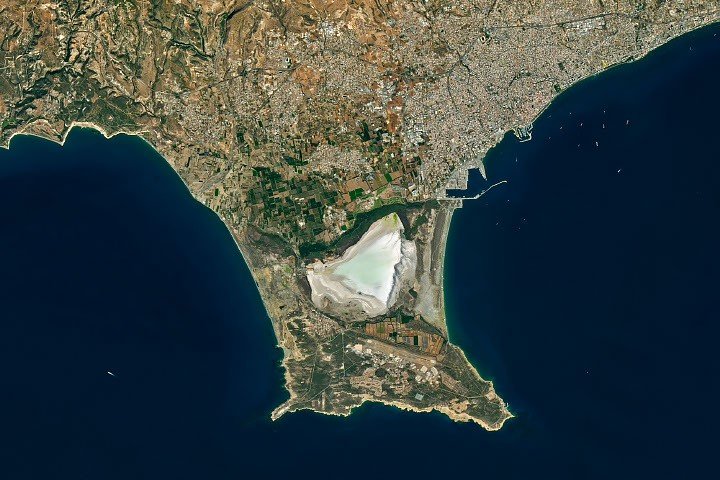
Seasonal rains had begun to fill Akrotiri Salt Lake when the Operational Land Imager on Landsat 8 captured an image of Cyprus’s Akrotiri Peninsula on October 10, 2026. The island of Cyprus began to form approximately 90 million years ago during the Late Cretaceous, as molten rock from the seafloor solidified to build new oceanic crust. Over time, tectonic forces pushed portions of this rock upward, creating a rugged island composed of ophiolite, a rock type with a mottled green appearance.
During the Miocene, layers of chalk, limestone, marl, and other marine sedimentary rocks accumulated around the island. Subsequent geologic uplift formed a smaller island to the south. Sediment from rivers and marine sources eventually created deltas and two land bridges, or tombolos, which joined the landmasses to form the Akrotiri Peninsula, the southernmost tip of Cyprus.
Akrotiri Salt Lake, a coastal lagoon that was once an arm of the Mediterranean Sea, sits between these two tombolos. The western feature, the Kouris River tombolo, formed about 50,000 years ago from river deposits. The eastern tombolo, which cut off the Mediterranean Sea, formed within the past 2,000 years. Water levels in the lake fluctuate seasonally, typically filling in late autumn and winter before drying out in the summer.
The lake has historically served as a habitat for overwintering flamingo populations, which averaged about 4,000 birds. However, recent reports indicate a significant decline, with the population falling to 30 birds in 2025. These birds typically feed on fairy shrimp, which provide the carotenoids responsible for their pink color.
Cyprus is also known for its history with snakes and cats. In antiquity, the island was called Ophiousa, or “land of snakes,” due to a large population of blunt-nosed vipers. According to legend, a fourth-century drought led the Roman Empress Helena to import shiploads of cats from Egypt to control the reptiles. These cats were released on the Akrotiri Peninsula in an area now known as Cape Gata, or Cape Cat. The site is home to the Holy Monastery of St. Nicholas of the Cats, where nuns continue to care for hundreds of cats. Today, the island is estimated to have more than one million cats.