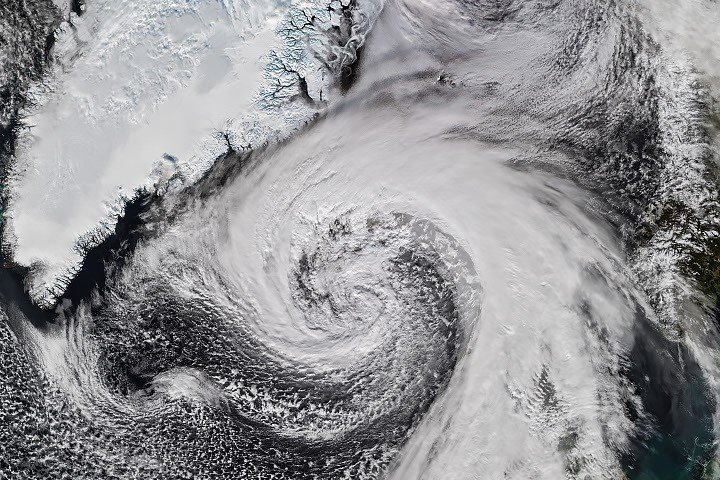
An intense extratropical cyclone grazed past Iceland on the afternoon of October 14, 2026, bringing hurricane-force winds, rain, and blizzard-like conditions. The VIIRS instrument on the NOAA-21 satellite captured imagery of the powerful low-pressure system as it moved across the North Atlantic.
The weather system originated from the remnants of Hurricane Isaias, which had made landfall in Florida as a Category 2 storm on October 9. After delivering a rainy, windy blow to the U.S. Gulf Coast and drenching much of the Eastern Seaboard, Isaias’s remnants rode the jet stream east over the North Atlantic and developed into an extratropical cyclone.
During its journey, the system’s air pressure plummeted by more than 50 hectopascals over a 24-hour period, according to reports. This drop was approximately double the criteria for explosive cyclogenesis, or bombogenesis. Some meteorologists believe the storm may have set a new October low for barometric pressure in Iceland, after correcting for altitude, likely breaking a record that has stood since 1963.
The cyclone lashed Iceland with high winds as it grazed the coast. A gust of 205 kilometers (128 miles) per hour was recorded near Eyjafjallajökull volcano in the country’s south, while a small island just offshore saw sustained winds of 150 kilometers (93 miles) per hour. Damaging winds extended into northern parts of the country, where residents also braced for sleet and snow.
Farther across the Atlantic, northwestern Scotland received gusts up to 90 kilometers (55 miles) per hour on October 14, according to news reports, resulting in cancellations on several ferry routes.